 Caprock Mold Pros
Attic mold removal in Lubbock, TX is almost always a roof story. Hail comes through in the spring, the shingles take a beating, and nothing leaks that week. Months later a slow soaking rain finds the weak spot, water runs down the decking, and the insulation soaks it up. Add a July attic at 140 degrees and you have a growing colony over your bedroom ceiling. Caprock Mold Pros connects you with a contractor who cleans it out, fixes what is feeding it, and gets the attic breathing again. Free inspection, and this line answers 24/7.
Why Attics Are the Number One Hidden Mold Spot on the South Plains
Nobody goes in the attic. That is the whole problem. Most people are up there twice a year, at Christmas and when the filter needs changing, and they are not looking at the underside of the roof deck with a flashlight.
Meanwhile Lubbock does everything it can to grow mold up there.
Hail
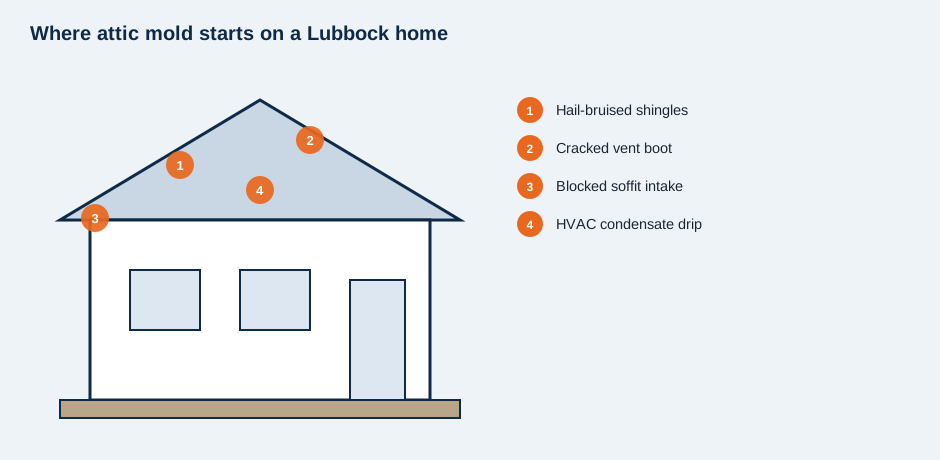
The South Plains sits in one of the highest hail-frequency corridors in the United States. Lubbock County sees multiple significant hail events most years, concentrated March through June, and golf-ball size is routine. Some storms produce total roof replacements across whole neighborhoods. Plenty of homes in between get bruised shingles that never got claimed, because the damage was not obvious from the driveway.
A bruised shingle has lost granules and its mat is compromised. It will shed water in a quick storm. It will not shed water in a long slow one. That is the leak that shows up in the attic months later.
Roof penetrations
Plumbing vent boots crack in this sun. UV exposure at 3,200 feet on the Caprock is hard on rubber. Swamp cooler curbs and duct penetrations are another chronic one, especially on older homes with a roof-mounted evaporative cooler. Flashing at chimneys and wall-to-roof transitions fails quietly.
Evaporative coolers
If you run a swamp cooler you are pushing humid air into the house on purpose. Some of that air ends up in the attic through ceiling penetrations, can lights and the access hatch. On a cool night that moisture condenses on the underside of the roof deck. Do it for a few seasons with poor attic ventilation and you get a black film across the north-facing decking.
HVAC in the attic
A huge number of Lubbock homes have the air handler in the attic. Condensate lines clog with dust and algae. Drain pans rust. Duct connections leak cold air into hot attic space and sweat. Any one of those puts a steady water supply exactly where nobody looks.
Ventilation that never worked right
Attics need intake at the soffit and exhaust at the ridge. Blown-in insulation packed into the eaves blocks the intake. A ridge vent painted over, or turbines seized up years ago, kills the exhaust. Without airflow, moisture that gets in has no way out.
What Attic Mold Looks Like
Look for these on the underside of the decking, on the rafters or truss members, and on the top of the insulation.
- Black or dark gray staining across plywood or OSB decking, often fanning downhill from a nail or a seam
- White or gray fuzzy growth on rafters, most often on the north slope
- Dark rings around nail points, which is condensation
- Insulation that is matted, discolored, or compressed in a patch instead of even and fluffy
- Water stains on the top of the ceiling drywall
- A musty smell when you open the attic hatch
- Rusted nail tips or truss plates, which means it has been humid up there a long while
Downstairs the tells are a ceiling stain, a musty smell strongest in a closet or hallway near the attic access, and allergy symptoms that get worse when the HVAC runs.
What Happens If You Leave It
An attic is not a sealed box. Air moves from the attic into the living space every time pressure changes, and that happens constantly. Bath fans, dryer vents, can lights and the attic hatch are all openings. If your air handler or ducts are up there and anything leaks, you are pulling attic air into the return and distributing it through the house.
Structurally, the decking is what to worry about. Plywood and OSB that stay wet lose strength. Long enough and you are not cleaning a roof deck, you are replacing sheets of it, which means the shingles come off too. That is the difference between a manageable job and a five-figure one.
And insulation that has been wet does not insulate. Compressed, moldy batts or matted blown-in has lost most of its R-value, and you have been paying for that every month on a Lubbock summer electric bill.
Every month you wait, the wet area on that decking gets bigger and the number of sheets that need replacing instead of cleaning goes up. Attic mold is the one where waiting genuinely costs the most.
The Attic Mold Removal Process
Find the water first
Contractors go up with lights, a moisture meter and a thermal camera. Contractors map where the decking is wet and trace it to the source. Nail holes, a failed boot, a valley, a cooler curb, a condensate line. Sometimes it is ventilation and there is no single leak at all. Contractors tell you which, because the fix is different.
Coordinate the roof repair
If it is a roof problem, the roof gets fixed before or alongside the mold work. Contractors work directly with your roofer or recommend one. Cleaning an attic under a roof that still leaks is throwing money away.
Containment and air control
Contractors seal the attic access and set up negative air with HEPA-filtered scrubbers exhausting outside, so nothing gets pushed down into your living space while contractors work. Contractors cover the access route and the room below it.
Remove the insulation
Contaminated insulation gets removed and bagged inside containment. Blown-in comes out with a commercial insulation vacuum. Batts get bagged. It leaves the house sealed, not in an open wheelbarrow through your hallway.
Clean the structure
Decking, rafters, truss members and joists get HEPA vacuumed, then treated. Where growth has gone into the wood grain, contractors use abrasive cleaning to take that surface layer off. Wood that is structurally compromised gets cut out and replaced.
Dry and treat
Dehumidification and air movement until the wood reads normal on the meter. Then antimicrobial treatment on cleaned surfaces. On some jobs contractors apply an encapsulant to seal the wood, which also makes future inspections easier because new growth shows against a clean surface.
Fix the airflow
Clear the soffit intakes. Add or repair exhaust ventilation. Install baffles at the eaves so future insulation does not choke off intake. Seal ceiling penetrations and the attic hatch so you are not pumping conditioned or cooler-humidified air up there.
New insulation
Fresh insulation back in at proper depth. This is the part that pays you back. Between the R-value and corrected ventilation, most customers see the difference on their summer bill.
Attic Mold and Your Insurance
Worth understanding before you call your carrier.
Texas homeowners policies generally cover mold resulting from a sudden, accidental, covered event. A hail-damaged roof that let water in during a storm can qualify. Mold from years of poor ventilation or a slow drip you never addressed generally does not.
What tips the scale is documentation and timing. A dated inspection report with photos and moisture readings, tied to a specific storm date, is a much stronger claim than "contractors noticed a smell sometime last year." If you took hail and never filed, find out whether that claim window is still open before you spend anything.
Contractors do not handle claims for you and contractors are not adjusters. Contractors do give you the written documentation that makes the conversation go better.
Where Contractors Work
Contractors do attic mold removal throughout Lubbock, including the older housing stock around Texas Tech and Tech Terrace where original decking and marginal ventilation are common, the mid-century neighborhoods inside Loop 289, and the newer subdivisions south and west of town. Same service in Wolfforth, Shallowater, New Deal, Idalou, Slaton and across the South Plains.
Related work you may need at the same time: water damage cleanup and drying, air quality testing, and mold damage repair.
When to Get in the Attic Yourself
You do not need us for a first look. Twice a year, and after every hail event, take a good flashlight up and check these.
- The underside of the decking on the north slope, where condensation shows first
- Around every plumbing vent boot, looking for a cracked or cupped rubber collar
- The valleys and any wall-to-roof transition
- The drain pan under the air handler and the secondary drain line
- Whether the insulation is even and fluffy or matted and compressed in a patch
- Whether you can see daylight at the soffit, which tells you the intake is not blocked
- Nail tips and truss plates, checking for rust
Do it in the morning during summer. A Lubbock attic in the afternoon is genuinely dangerous, and there is no reason to be up there at 140 degrees when 7 a.m. works fine.
If anything on that list looks wrong, call and contractors will come read it with a meter.
Call (806) 552-9258 and contractors will get up there and look. Free.
Common Questions About Attic Mold Removal
How did mold get in my attic if I never had a leak?
Condensation, usually. Warm moist air from inside the house rises into the attic through can lights, bath fans and the access hatch, then condenses on cold roof decking. Add blocked soffit vents or dead turbines and there is no way for that moisture to leave. Evaporative coolers make it worse because they add humidity on purpose.
Does the insulation always have to be replaced?
If it has visible growth, is matted, or has been wet, yes. Insulation is porous and there is no practical way to clean it. The good news is that wet insulation was not insulating anyway, so replacing it usually shows up on your electric bill.
Can you just spray the attic and be done?
No. Spraying a chemical over live growth on wet decking treats the surface and leaves the roots and the water source. Any company offering a spray-only attic treatment is selling you a paint job. Removal, cleaning, drying and airflow correction is the actual fix.
Will the roof have to come off?
Almost never. Decking is cleaned from underneath on the great majority of jobs. The roof only gets involved when sheets are structurally compromised and need replacing, or when the leak repair itself requires shingle work.
How long does an attic mold job take?
Most residential attics run two to four days depending on square footage, access, and how much decking needs abrasive cleaning. Insulation removal and reinstall adds time. Summer work in Lubbock attics gets done early in the morning for obvious reasons.
Will my homeowners insurance pay for attic mold?
It can, when the mold traces back to a covered sudden event like storm or hail damage to the roof. It generally will not when the cause is long-term condensation or a leak that went unaddressed. Documentation and dates matter a lot.
How do I keep it from coming back?
Three things. Keep the roof sound and check it after every hail event. Get real intake and exhaust ventilation working. Seal the ceiling plane so house air is not leaking into the attic. Do those and you have removed the water, and mold cannot grow without water.